
 CALL: 604-245-7474


2026
Wildfire Smoke and Your Pet: What Metro Vancouver Owners Need to Know
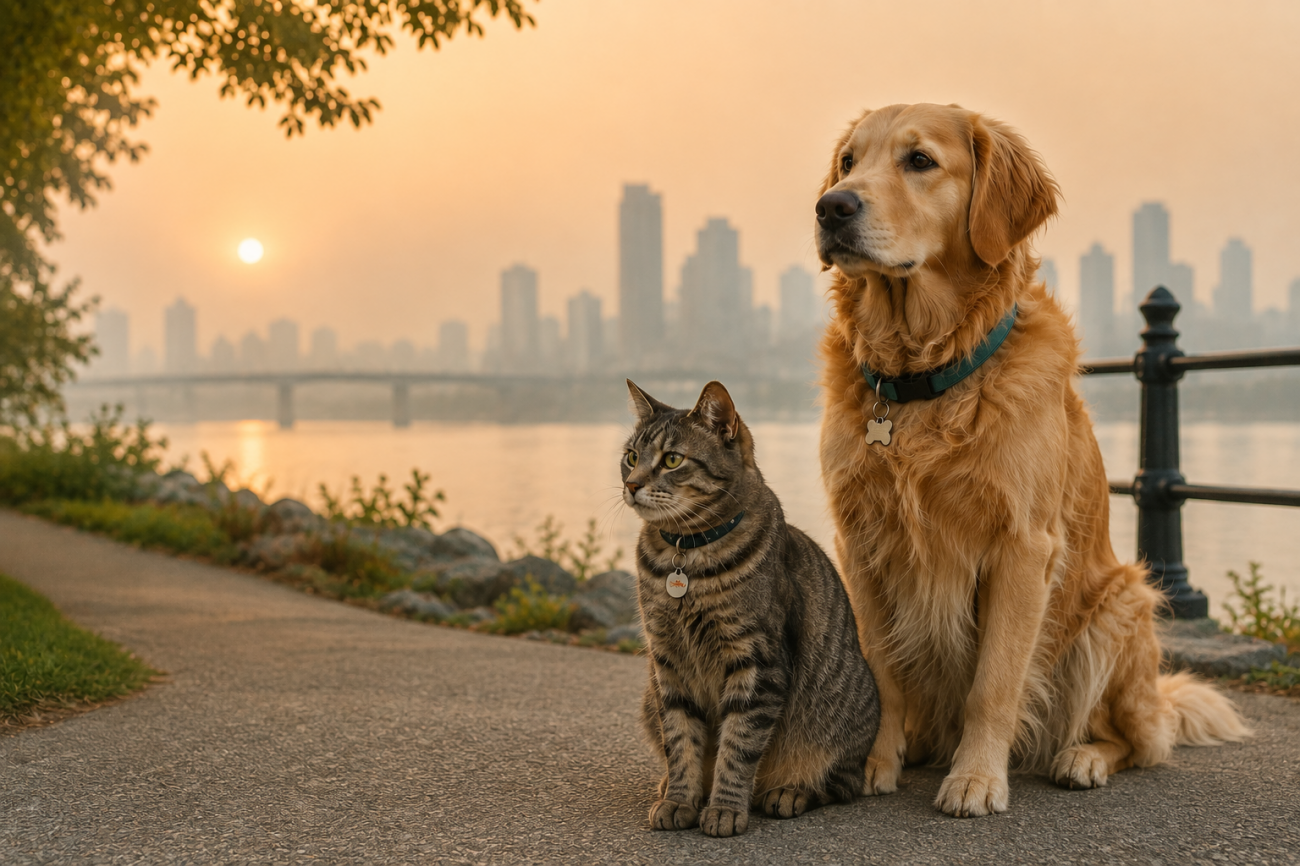
Every summer, wildfire smoke drifts into Metro Vancouver, bringing hazy skies and air quality advisories. Most of us know to limit our own time outside on those days — but the same smoke is reaching your pet’s lungs too, and they can’t tell you when it’s bothering them.
Here’s what Richmond pet owners should know about wildfire smoke, drawn from what we see at Petsville every smoke season.
Why Smoke Is Hard on Pets
Wildfire smoke is a mix of fine particulate matter (PM2.5), carbon monoxide, and irritant gases. The fine particles are the main problem — they’re small enough to travel deep into the lungs and irritate the airways. Dogs and cats breathe faster than we do relative to their size, and they spend their outdoor time at ground level where particulates settle.
Pets at Highest Risk
- Flat-faced (brachycephalic) breeds — Pugs, French bulldogs, Bulldogs, Boston terriers, Persian and Himalayan cats already have narrowed airways, making smoky air much harder to tolerate.
- Pets with asthma, bronchitis, or heart disease — cats with feline asthma, dogs with chronic bronchitis, collapsing trachea, heart disease, or previous pneumonia are at increased risk.
- Senior pets, puppies, and kittens
- Birds — extremely sensitive to air quality; keep them indoors with filtered air whenever there’s any smoke at all.
Signs the Smoke Is Affecting Your Pet
- Coughing, gagging, or wheezing
- Red, watery, or irritated eyes
- Runny nose or sneezing
- Louder or more laboured breathing, especially in cats
- Tiring faster than usual on walks
- Lethargy, reduced appetite, or disorientation
If your pet has laboured breathing, blue or pale gums, or seems weak or disoriented, treat it as an emergency and call us right away at 604-245-7474.
How to Protect Your Pet on Smoky Days
- Check the AQHI before walks. When Metro Vancouver’s Air Quality Health Index is 7 or higher, keep outdoor time to short bathroom breaks.
- Shift exercise indoors — hallway fetch, stair games, puzzle feeders, and training sessions burn energy without the lung workout.
- Keep windows closed and run air conditioning or a HEPA air purifier in the room where your pet spends the most time.
- Keep cats indoors during advisories, and bring outdoor water and food stations in so outdoor cats come to the door.
- Skip the car errands. A parked car fills with smoky air (and heat) quickly.
- Watch high-risk pets closely — if your pug or asthmatic cat is having a harder time than usual, don’t wait it out.
When to Call Petsville
If your pet develops coughing, eye irritation, or any signs of breathing difficulty during a wildfire smoke event, it's a good idea to have them assessed—especially if symptoms persist after the air quality improves. Pets with existing heart or lung conditions, such as feline asthma or chronic bronchitis, should be seen sooner, as smoke can make these conditions worse. If your pet has a chronic airway disease, we can also help you develop a smoke-season management plan. For some pets, particularly cats with asthma, having prescribed rescue medication available before wildfire smoke arrives can help manage flare-ups more effectively.
Worried about your pet this smoke season? Book a visit at Petsville Animal Hospital — petsvillevets.com or call us today at 604-245-7474.
 Call: 604-245-7474
 meow@petsvillevets.com
 120 - 3511 Moncton Street,